Transform Your Space with Artificial Décor | Complete Guide
14/10/2026
African Wall Art Canvas: Bold, Meaningful Pieces for Home
14/10/2026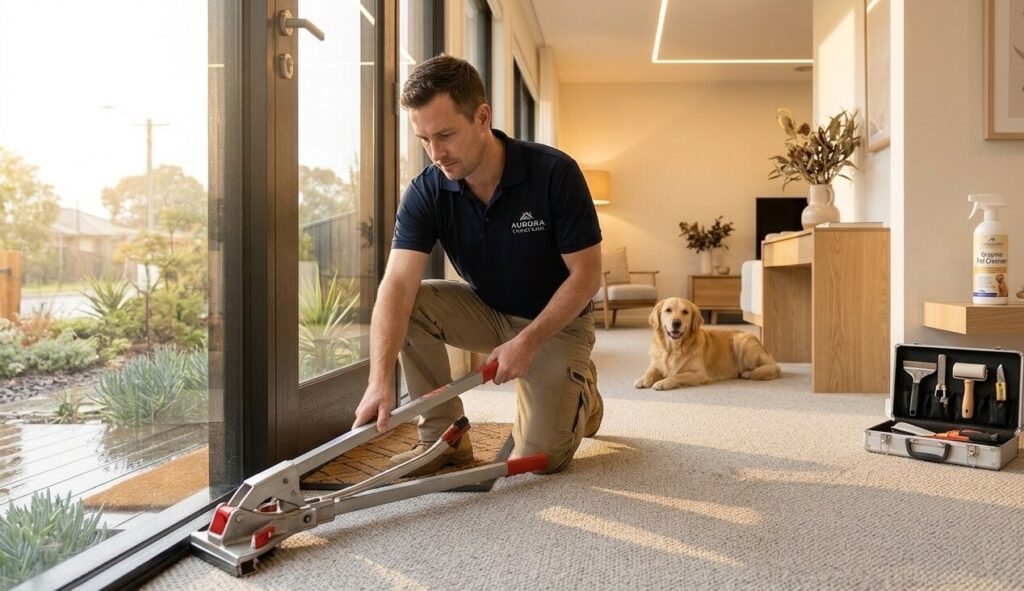
Carpet restretching is one of those home maintenance tasks most Australian homeowners rarely think about until a visible problem demands attention. By then — when ripples are crossing the living room floor or edges are lifting away from walls — the carpet has typically been communicating its need for professional attention for considerably longer than the homeowner realised. Understanding restretching as a proactive maintenance task rather than a reactive repair measure is the perspective shift that separates homeowners who manage their carpet effectively from those facing premature replacement costs. For Melbourne homeowners wanting to get the most from their flooring investment, professionals specialising in Carpet Restretching Melbourne are consistent in their message: stretching is not a once-in-a-carpet’s-lifetime event — it is a periodic maintenance task with a frequency determined by the specific conditions of each home.
What holds true universally is that addressing tension loss when it is first detectable — before visible rippling or buckling develops — is always less costly and better for the carpet’s long-term condition. The experienced professionals behind quality Carpet Repair Melbourne services reinforce this point repeatedly: carpets restretched at early signs of tension loss consistently achieve better results and longer service life than those where restretching is deferred until the condition becomes severe.
Why Carpet Loses Tension Over Time
Understanding the mechanisms behind carpet tension loss informs both restretching frequency and the preventive measures that extend intervals between services.
Natural Backing Relaxation
All carpet undergoes a degree of natural relaxation after installation. The backing material held under tension by tack strips during installation gradually accommodates to its stretched position over the first months of service. For certain carpet types — particularly those with hessian or jute secondary backing — this initial relaxation can be sufficient to produce minor rippling within the first year.
Moisture and Humidity Fluctuations
Moisture is the single most significant driver of ongoing tension loss in Australian homes. Carpet backing absorbs moisture and expands in high humidity, then contracts when conditions dry. Repeated cycles of expansion and contraction gradually stretch the backing beyond its original dimensions. In Melbourne’s variable climate — with persistent winter dampness and drier summers — this cyclic moisture-driven tension loss is particularly pronounced.
Foot Traffic and Mechanical Stress
The cumulative mechanical stress of foot traffic gradually works carpet away from tack strip anchorage, particularly near doorways, at staircase bases, and along hallways. The lateral component of walking forces drives this gradual migration, and its effect is most pronounced where traffic involves frequent turning or direction changes.
Poor Original Installation
Carpet installed with inadequate tension or poorly placed tack strips starts its service life closer to the tension threshold that produces visible rippling — reaching the point of needing restretching sooner than correctly installed carpet.
General Restretching Timelines
While individual circumstances vary, several general timeline benchmarks provide a useful framework for Australian homeowners.
The First Year Check
For carpet types with natural fibre backing, or those installed in homes with variable humidity, a first-year inspection for tension loss is advisable. If no tension loss is detected, no re-stretch is required at that stage — but catching early relaxation before backing deformation becomes permanent produces significantly better outcomes.
Every Five to Seven Years for Standard Residential Carpet
For most residential carpet in average-traffic Australian homes, a re-stretch interval of five to seven years is a reasonable general guideline. This accounts for gradual natural tension loss through normal usage, seasonal humidity fluctuations, and everyday foot traffic stress.
Adjust this interval based on your home’s specific conditions. Higher traffic, greater humidity fluctuations, or more tension-sensitive carpet types may require re-stretching every three to four years. Stable conditions and lower traffic may allow eight to ten years between services.
After Significant Moisture Events
Any event introducing significant moisture — a plumbing leak, flooding, or extended high indoor humidity — should trigger a carpet inspection once the carpet has dried fully. Moisture-induced tension loss can occur rapidly, and early identification produces better repair outcomes. Never schedule a re-stretch while carpet is still damp.
After Major Furniture Repositioning
Dragging heavy furniture across carpet applies acute lateral stress that can cause immediate tension loss. Inspect carpet tension along the nearest walls after any significant furniture movement, and address any resulting rippling before foot traffic compounds the problem.
What the Restretching Process Involves
A professional re-stretch uses a power stretcher — a long-handled tool that applies controlled, even tension across the full room width and length. This differs fundamentally from the knee kicker that DIY attempts rely on, which applies only localised tension and consistently produces uneven results.
The technician works systematically through the room, applying tension in a specific sequence before re-anchoring the carpet to tack strips. Excess carpet at walls is trimmed and tucked neatly, and threshold strips at doorways are reset.A professional re-stretch of an average residential room takes one to two hours, with the result — a flat, taut surface with secure perimeter anchorage.
Extending the Interval Between Restretchings
Several practical measures slow tension loss and extend the time between necessary re-stretches.
Managing indoor humidity year-round through deliberate ventilation, dehumidifier use during high-humidity periods, and prompt attention to moisture infiltration events significantly slows moisture-driven backing relaxation. Always lift rather than drag furniture during repositioning. Use quality entrance mats to reduce moisture introduction from outside, and address subfloor moisture issues promptly.
Having carpet professionally installed using a power stretcher from the outset — rather than relying on a knee kicker alone — establishes the highest possible initial tension baseline, extending the time before the carpet drops below the threshold at which rippling develops.
Final Thoughts
How often carpet should be stretched is best answered with a framework: a first-year inspection for susceptible carpet types, a general five to seven year maintenance cycle as a baseline, and adjustment of that baseline based on each home’s specific conditions.
The most important principle is to act on early signs of tension loss rather than waiting for rippling to become pronounced. Early intervention consistently produces better results at lower cost. Monitor your floors, understand the signs your carpet is showing you, and respond promptly — your carpet will reward that attention with years of additional service.