
Why Custom Kitchen Magnets Are a Smart Branding Business Tool
14/10/2026
How Often Should You Stretch Your Carpet?
14/10/2026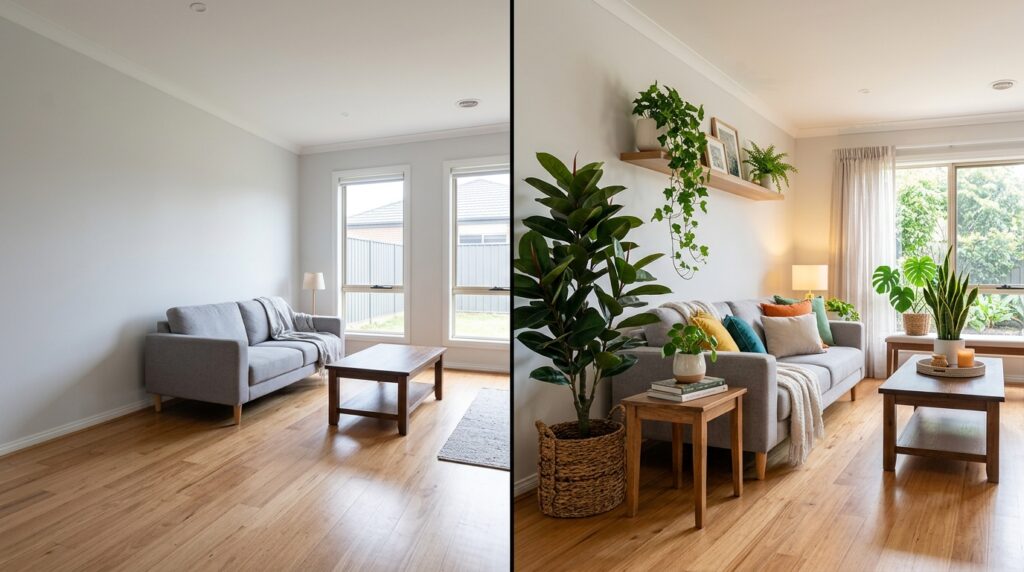
Most people think artificial decor is about fooling someone. It’s not. It’s about honest choices made by people who want the look of a living space without the work that actual living plants demand or without access to plants that suit their climate and light conditions.
The spaces that look best with artificial decor are not trying to hide the fact that they’re artificial. A living room with artificial plants doesn’t benefit from people thinking they’re real. It benefits from looking thoughtfully designed. An office with a wall of greenery doesn’t need it to pass as a forest. It needs it to feel calmer, more human, less corporate.
The transformation happens when you move from thinking “artificial or real” to thinking “what does this space need?” A bedroom with no light gets artificial plants that stay healthy year-round without becoming a watering task.
A small balcony without ground space gets a vertical garden that brings in green without compromising the view. An open-plan office gets a statement wall that divides space and softens acoustics in one move.
This guide takes you through every category of artificial decor, shows realistic before-and-after transformations across different spaces and challenges, and covers the technical details that separate products that look good for two years from those that look good for a decade.
Table of Contents
- Why Spaces Need This Transformation
- Artificial Grass and Turf for Outdoor Spaces
- Artificial Plants for Every Light Condition
- Artificial Flowers and Botanicals
- Statement Trees and Large Specimens
- Wall Panels and Living Walls
- Vertical Gardens for Small Spaces
- Transforming Home Interiors
- Office and Commercial Spaces
- Outdoor Living Areas
- Seasonal and Event Decor
- Product Quality and Durability
- Colour Coordination and Design
- Pet and Child Safety
- Climate Suitability Across Australia
- Comparison — Before and After Real Spaces
- Seasonal Care and Maintenance
- Cost and Investment Guide
- Growing Artificial Decor Outside Australia
- Frequently Asked Questions
Why Spaces Need This Transformation (Why)
The Real Problem with Living Plants
Natural plants require things. Light at specific intensity levels. Water on a schedule that changes with the season. Humidity in a narrow band. Fertiliser that must not be forgotten.
In homes with poor light, tiny balconies, low humidity, forgetful owners, or very young children, natural plants stop being decoration and start being a project that regularly fails.
The failure cascades. A plant dies. The space looks sparse again. So you try another plant, which also fails. Eventually, you stop trying and accept the space as it is. That resignation is what this guide addresses.
What Artificial Decor Actually Solves
High-quality artificial plants solve a specific problem: they deliver the visual impact of natural greenery in conditions where natural plants cannot thrive. They solve it permanently. They don’t wilt. They don’t brown. They don’t need water or fertiliser or light. They stay the colour and texture you choose.
For the spaces where this applies, artificial decor transforms how the space feels. A dark hallway stops being dark because it lacks light; it becomes calm because it’s lined with trailing greenery that would never survive there naturally. A small balcony that can’t accommodate a garden becomes a retreat because artificial planters give it the texture and depth that empty concrete lacks.
The transformation is not subtle. It’s functional. The space actually changes.
Artificial Grass and Turf for Outdoor Spaces
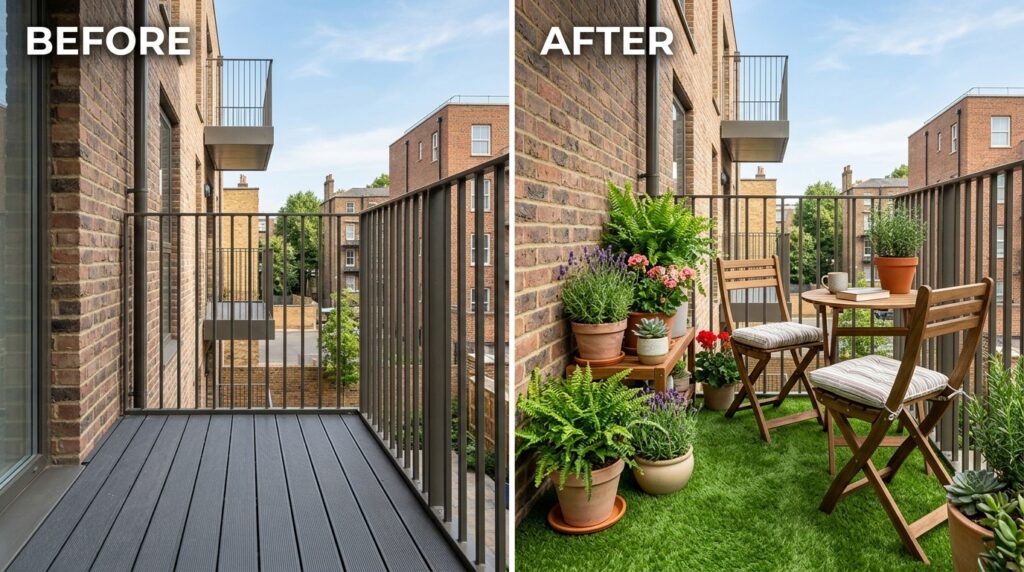
Before: Bare Concrete, Mud, or Dead Lawn
Transform Your Space with Artificial Décor | Complete Guide 7
A backyard patio that’s pure concrete. A small balcony with hard decking. A north-facing slope where nothing grows. A courtyard where water pools after rain and creates puddles. These are the spaces where artificial turf solves a real problem.
After: Year-Round Green That Handles Everything
All-seasons synthetic turf transforms these spaces by doing what natural grass cannot: staying green and usable regardless of weather, water restrictions, frost, or neglect.
A family with young children gets a soft surface that’s always ready for play. A balcony in a water-restricted area becomes a retreat with living texture. A courtyard that floods becomes a space with resilient drainage.
The transformation is immediate. The space goes from unusable or visually flat to a place people actually want to spend time in.
Product Categories
High-specification synthetic turf with UV stabilisation tested to 8+ years in Australian conditions, drainage rates of 30+ litres per square metre per hour, and frost tolerance down to -20 degrees Celsius. This category sits at the intersection of durability and realism. Installation requires proper sub-base preparation, and maintenance is genuinely minimal — a monthly brush and occasional infill top-up.
Suits: Family backyards, small courtyards, balconies, creating a soft play surface, and achieving visual continuity across a space.
Budget Turf (Lower Cost, Shorter Lifespan)
Lower-specification synthetic turf with less UV protection and lower drainage rates. It works in the first 2-3 years, particularly in protected positions. Beyond that, fading and drainage issues begin.
Suits: Rental properties, temporary installations, commercial applications where replacement cycles are planned.
Real Space Transformation
Small Balcony:
- Before: Hard decking, no colour, restricted water access
- After: 20sqm of all-seasons turf, drainage handled through sub-base, looks and feels like a small lawn despite zero natural soil
- Time to impact: Immediate
- Ongoing cost: $0 (turf itself requires no maintenance)
Family Backyard:
- Before: Patchy grass that browns in summer, waterlogged in winter, requires weekly mowing
- After: Durable, soft, always-green surface that handles ball games, water play, and rough use
- Time to impact: 3 months (soil settling)
- Ongoing cost: $20-30 per year for infill top-up
Artificial Plants for Every Light Condition
The Category That Changes Most Homes
Artificial plants are the most widely used artificial decor because they solve the most common problem: spaces with poor light that need greenery.
Before: Dark Corners, Bare Shelves, Uninviting Entries
A north-facing living room that gets no direct sun. A bedroom corner that’s always in shade. A windowless hallway. A bathroom with only a skylight. An office corner away from windows. These spaces are difficult to decorate because living plants won’t thrive in them. The space stays hard, unfinished, uninviting.
After: Softened Spaces That Feel Lived-In
That dark hallway becomes calm and approachable because it’s lined with trailing ivy or fern that would never survive there naturally. The bathroom corner develops visual interest because a potted plant sits there reliably, without needing humidity management. The office corner stops feeling like a forgotten space and starts feeling intentional.
Plant Categories by Light Level
Full Shade Plants (0-2 Hours Direct Sun)
Realistic artificial ferns, peace lilies, cast-iron plants, philodendrons, and trailing pothos work in positions where natural versions would slowly die. Quality versions have textured leaves that catch light naturally despite the lack of sun. Get More Info…